Abstract
Candidate bib identification during endurance tests has progressed with the use of Artificial Intelligence, RFID race timing systems, and UHF RFID race timing. By combining AI-based image processing with RFID chip timing for athletes, participant data and timing records are captured and reviewed with greater control. This approach supports endurance event timing solutions and sports event timing services, allowing organisers to manage identification and performance records together.
The integration of AI and machine learning solutions with RFID athlete tracking enables consistent bib recognition across large-scale endurance tests, supporting race timing technology in India and structured participant monitoring.
Problem
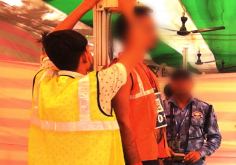
During endurance or recruitment tests, identifying impersonation becomes difficult when relying on manual checks. While chip timing solutions for marathons and endurance formats capture timing data, confirming that the correct candidate is wearing the assigned bib remains a challenge.
Without AI-assisted verification and an automated participant tracking system, organisers face issues linking timing records with candidate identity. This can affect sports event timing services and disrupt participant record validation in high-volume tests/races.
Solution
We introduced an AI-based system integrated with RFID race timing solutions to recognize Bib numbers and verify participants in real time. The process combines computer vision and RFID timing systems to detect, match, and confirm whether the same registered candidate wears the assigned Bib number throughout the test. Supported by UHF RFID tracking, the system enhances event timing, race management, and performance tracking with dependable results.
Then the recognition process is carried out by determining whether the assigned Bib number is worn by that registered individual by referring to our previously collected candidate registration database.
The system validates whether the assigned bib number continues to be worn by the registered individual throughout the endurance test. This verification is carried out by referencing the existing registration database and linking it with AI-based visual analysis and RFID athlete tracking records
Functions:
1. Dataset collection: Candidate videos from endurance events are captured and converted into images for training AI algorithms and RFID tracking systems.
2. Data annotation: Using LabelImg, Bib numbers are labeled for accurate participant tracking through AI and race timing technology.
The annotated objects are stored in an XML file and are reinspected with a Python script.
3. Data splitting: Annotated data is divided into training, validation, and testing to improve performance analysis.
4. Data training: The TensorFlow model trains the system to identify Bib numbers quickly, aligning with chip timing systems and UHF RFID tracking.
5. Monitoring the progress: Through TensorBoard, AI algorithms are refined for consistent event timing solutions and race management
6. Data testing: Final testing validates RFID athlete tracking and confirms reliable performance tracking results.
Tools and Software used:
LabelImg
Machine Learning
TensorFlow
AI Algorithms
RFID Race Timing Systems
Future
As Artificial Intelligence consulting and AI and machine learning solutions continue to evolve, this bib recognition approach will further support endurance event timing solutions and participant validation. Future developments may expand into broader sports event technology use cases, strengthening how identification and timing data are reviewed together during large-scale endurance tests.